Notable Figures of the Fractured Isles
“The following accounts are drawn from the Pathfinders’ historical archive, the Brass Dragon Grand Library’s biographical records, and several collections of traveller testimony. They are presented as faithfully as the sources allow, which is to say: imperfectly. Some details are contested. Some subjects are, according to certain credible reports, still alive. The reader is advised to treat these as the closest available approximation of truth rather than its final form.”
Corvin Black Feather
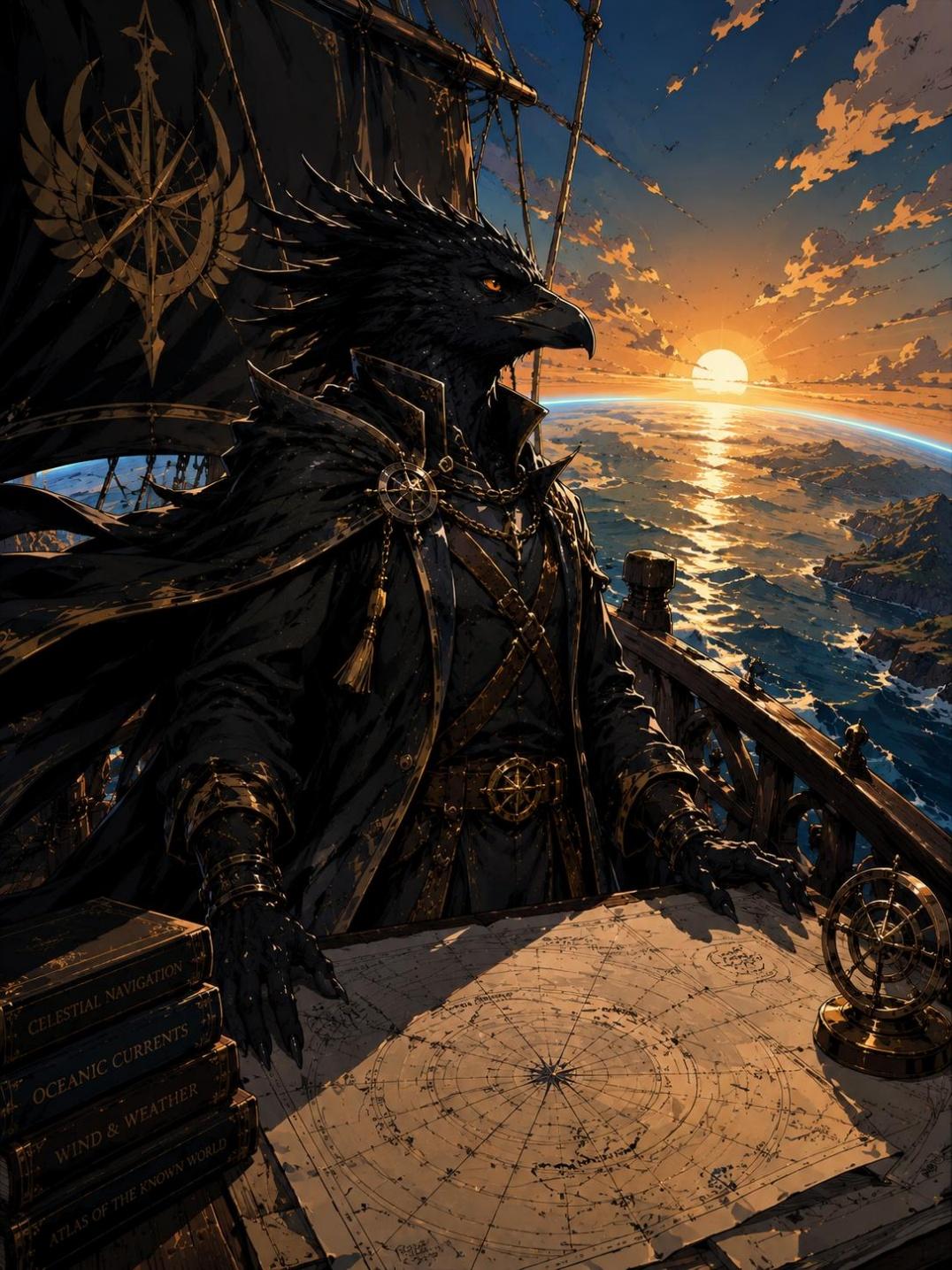
Epithet: The Navigator, The World-Prover
Race: Aarakocra
Era: Age of Recovery, approximately 800–900 AF
Before Corvin Black Feather, the spherical nature of the world was a mathematical hypothesis supported by astronomical observation and disputed by nearly everyone who sailed for a living. The practical objection was simple and apparently reasonable: if the world curves, why does it not simply fall away beneath you? The theological objection was more persistent — the cosmological texts of several faiths described the world as a flat creation, and challenging that description had consequences.
Corvin was a navigator — an aarakocra whose flock had long specialised in open-water flight, reading the stars for position rather than landmarks. Over the course of seventeen years, they completed the first fully documented circumnavigation of the Fractured Isles, travelling east continuously and arriving back at the point of departure from the west. The voyage took three ships, lost one to weather, and produced a set of charts and a written account that the Brass Dragon Grand Library acquired and has since refused to sell at any price.
The response to their return was not universally celebratory. Three religious institutions issued formal statements of disagreement. The Arcane Senate commissioned a rival expedition that confirmed the findings. Corvin, by all accounts, found the controversy exhausting and retired to a coastal settlement where they spent the remaining decades of their life teaching navigation to anyone who asked.
Legacy: The shape of the world is no longer debated. The charts Corvin produced remain in active use.
Adventure Hooks
- A church that still formally disputes the findings maintains an institution dedicated to producing a counter-argument.
- A second set of charts that Corvin apparently never submitted to the Library exists somewhere.
- A section of the documented route that subsequent navigators cannot reproduce — the geography simply isn’t there when others attempt it.
Elyrian Voss
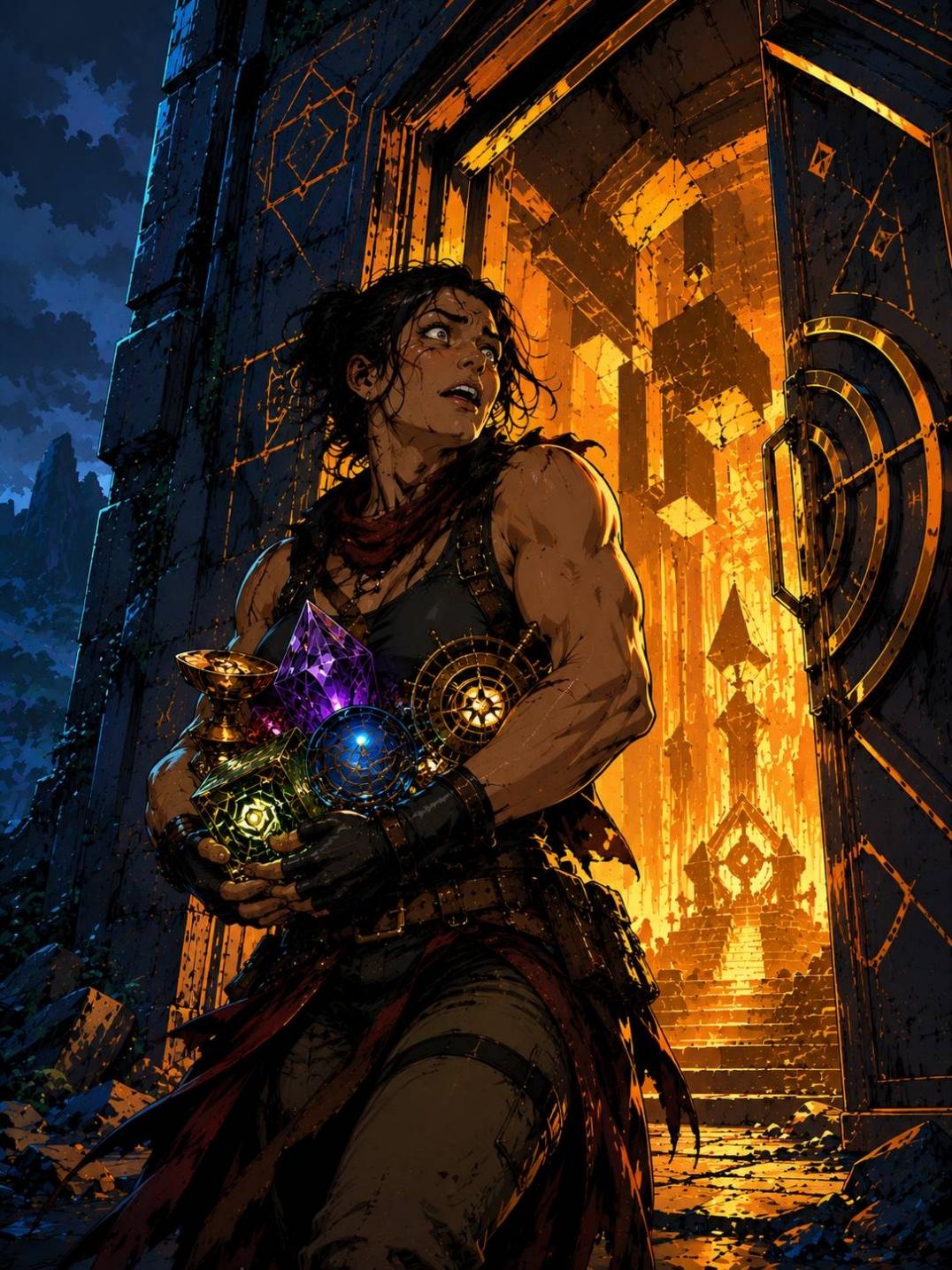
Epithet: The First Return, The Vault-Walker
Race: Human
Era: Early Modern Age, approximately 2000–2100 AF
Many people had entered Eioran Vaults before Elyrian Voss. None had come back out. This was sufficiently well-established that by the time Voss announced their intention to enter one, the Pathfinders of Aestri had a standard notation in their Vault records for fatalities: a small mark indicating entry, with no corresponding mark for exit.
Voss came back out. They came back out carrying a collection of maps drawn in an unknown cartographic notation, three artefacts of entirely unidentified function, and an account of the interior of a Vault that remains the only first-hand testimony ever recorded. The account is detailed, internally consistent, and deeply strange. The Vault interior, Voss described, did not obey standard spatial geometry. The maps they brought back do not correspond to any known geography.
What Voss said about the deeper areas of the Vault — the sections they found after passing through what appeared to be a security layer — was redacted from the public account by the Ebony Order within six months of its publication. The original is held in the deep archive. The Order has declined to explain what the redacted passages contain.
Voss spent the last years of their life attempting to learn the language visible on the artefacts. They produced a partial translation before their death. The partial translation is also held in the deep archive.
Legacy: Proof that Vaults can be entered and exited. A body of unreleased research that the Order has not explained.
Adventure Hooks
- The unredacted account exists somewhere — Voss gave a copy to a private individual before submitting to the Order.
- The artefacts were donated to the Order but are not listed in the public catalogue.
- The partial translation could unlock something significant if completed — and someone may be close to completing it.
Alborak SteelFist
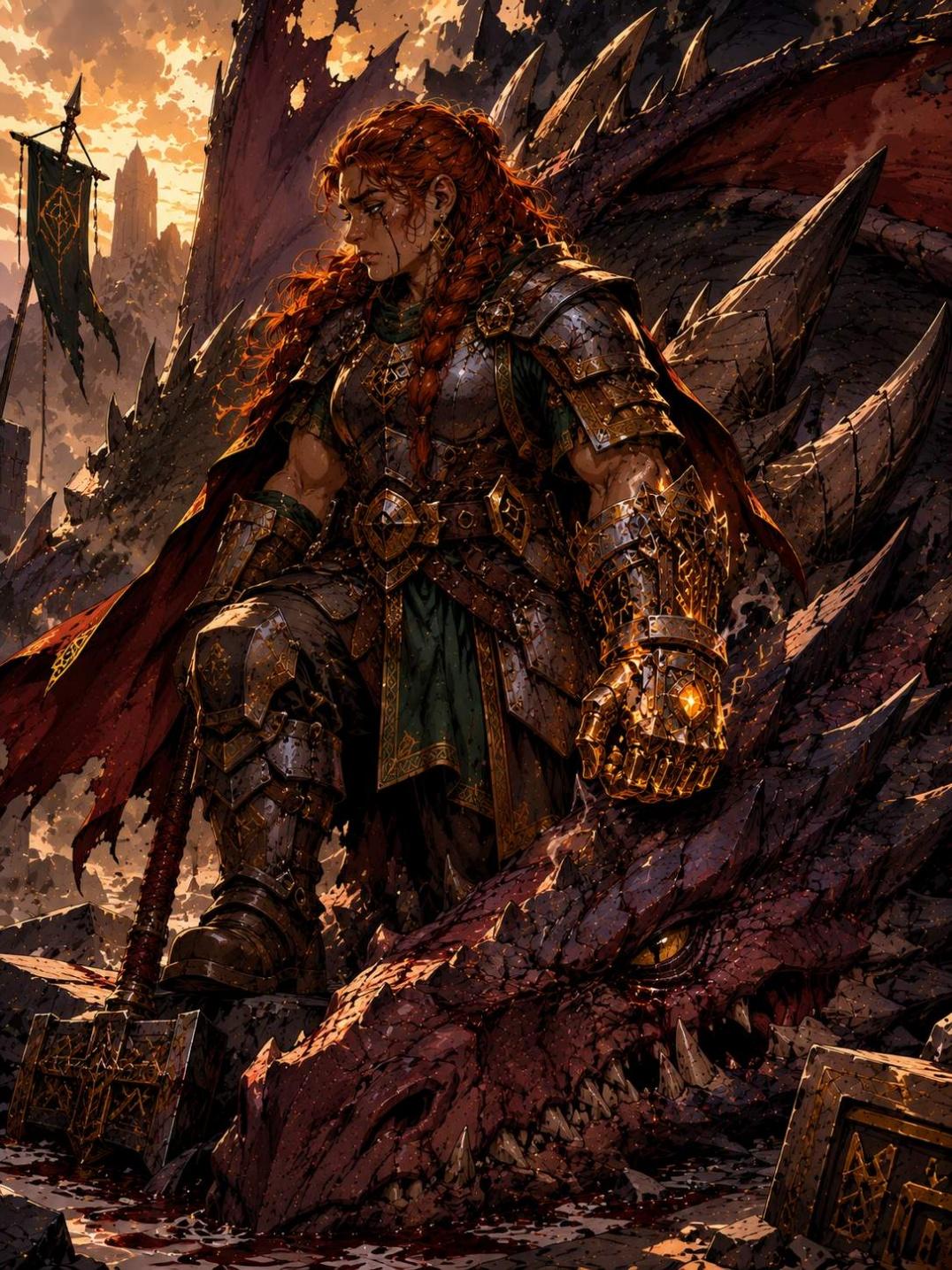
Epithet: The Dragonsbane, The Once-Victor
Race: Dwarf
Era: Age of Recovery, approximately 600–700 AF
Every fact about Alborak SteelFist’s most famous act is disputed except the outcome. The dragon is confirmed dead. SteelFist is confirmed to have been present and to have delivered the killing blow. Everything else — which dragon, which province, what the provocation was, whether it was honourable combat or the product of some prior arrangement — is the subject of a disagreement that has outlasted everyone who was actually there.
The version told in the Red Dragon Province is that SteelFist ambushed a sleeping dragon and killed it with a poisoned weapon, which is why no dwarven song celebrates the deed.
The version told in the Dwarven Mountains is that SteelFist challenged the dragon in open combat after the dragon refused to answer for the destruction of a dwarven settlement, and that the fight lasted three days.
The version the Pathfinders consider most credible — based on the earliest surviving accounts — is closer to the second, but includes the detail that SteelFist did not feel good about it, and that the famous gauntlet was forged specifically for the fight and never used again afterward.
SteelFist outlived the deed by forty years and refused to discuss it in any recorded interview. They are buried in the Dwarven Mountains with the gauntlet. The tomb is sealed.
Legacy: The singular proof that a mortal can kill an adult dragon in direct combat. Disputed enough that it functions mostly as myth.
Adventure Hooks
- The tomb in the Dwarven Mountains. The gauntlet is still in it.
- Whatever the gauntlet actually was — the metallurgy described in the earliest accounts doesn’t match anything in the known dwarven tradition.
- The dragon that was killed had, apparently, a living offspring.
Captain Seraph Tideborn
Epithet: The Last Pirate Queen, The Maw-Finder
Race: Tiefling
Era: Age of Recovery, approximately 1200–1350 AF
Seraph Tideborn operated in the years before the TideLock Agreement, when the shipping lanes had become hostile enough that honest trade was nearly impossible and several provincial economies were suffering accordingly. She was, by the standards of her profession, unusually principled: she targeted vessels belonging to the merchant monopolies that had made trade unnavigable, left vessels belonging to independent traders alone, and was scrupulous about not killing people she did not need to kill. This is the version of Tideborn that the shanties preserve.
The version the merchant houses prefer to remember is a woman who cost them a great deal of money over several decades and who, when the TideLock negotiations began, was invited to the table not as a criminal but as a de facto maritime power whose cooperation was necessary for any agreement to function. Tideborn negotiated the section of the TideLock Agreement covering independent maritime operations, and retired when it was signed.
The Sunken Maw is her most enduring legacy in the geographical record. Tideborn’s logbooks are the only primary source on what lies at the Maw’s edge — the teeth-like protrusions that ring it, the sound it makes at low tide, the thing she describes as present in the water below. The relevant pages of the logbooks were submitted to the Ebony Order with a note from Tideborn herself:
“You will want to know about this. You will not enjoy knowing.”
Legacy: The TideLock Agreement maritime provisions. The only firsthand account of the Sunken Maw. The logbooks.
Adventure Hooks
- The logbooks are held in the Order’s archive, but only the pages Tideborn submitted. The rest of the logbooks were kept private. Where are they now?
- The Maw itself — Tideborn got closer than anyone before or since. How?
- The thing in the water that she described. She did not describe it fully, even in the private pages.
Gariss Thorn
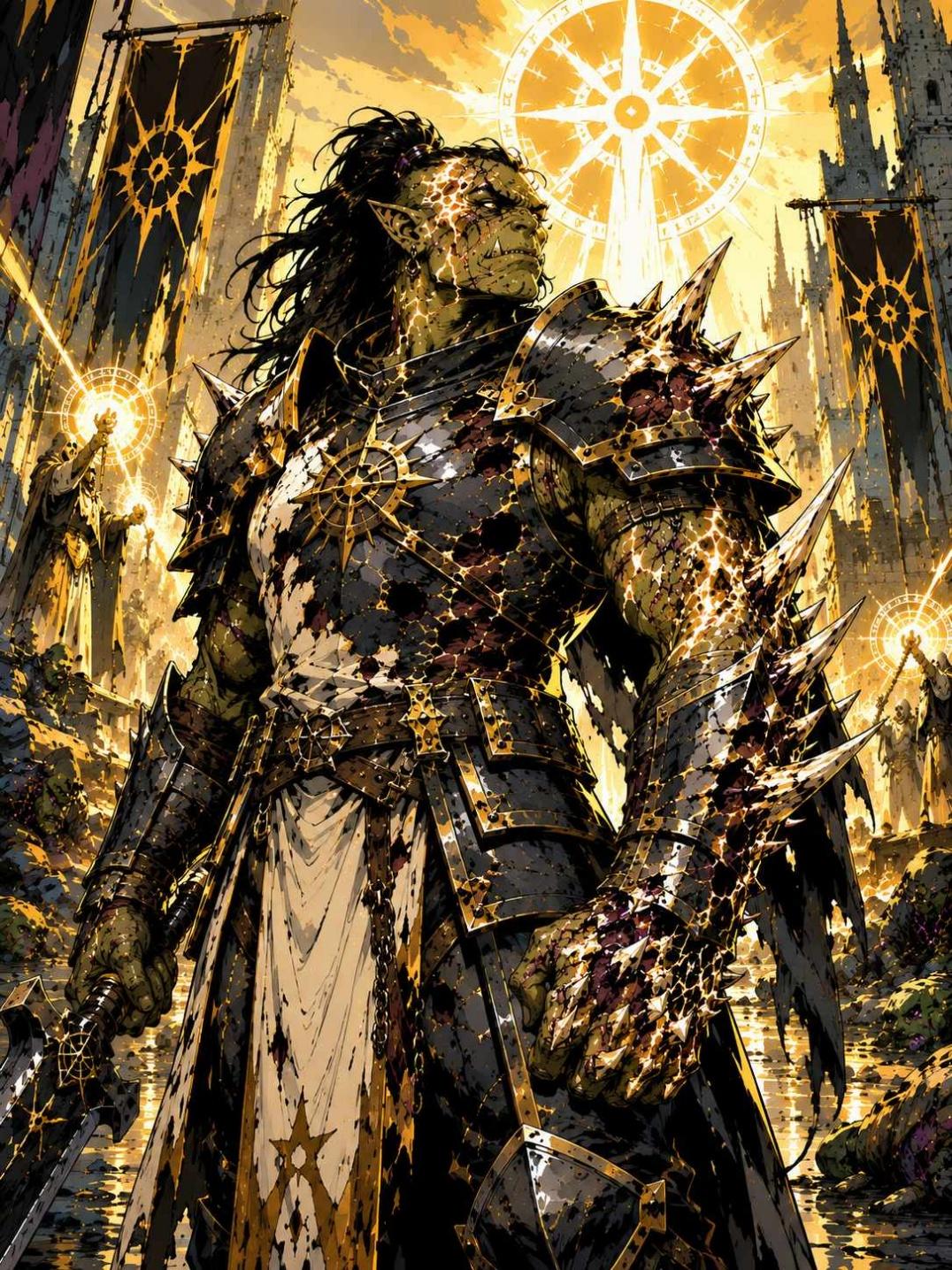
Epithet: The Purger, The Honourable End
Race: Orc
Era: Modern Age, approximately 2600–2750 AF
Gariss Thorn is the Ebony Order’s most celebrated field agent and its most discussed cautionary example, and both things are completely accurate. Their career record is extraordinary: seventeen cults disbanded, nine artefacts recovered without casualties, and the single most significant act of solo arcane intervention in the Order’s modern history — the purging of a mid-sized coastal city after planar corruption was released by a cult that had accessed something in a Vault that should have stayed sealed.
The purging took eleven days. Thorn worked alone for the last five, after the corruption consumed their support team. The accounts of those who were rescued describe a figure moving through streets that had stopped being streets, conducting rituals that they clearly understood might not work in time, and simply continuing anyway.
What the corruption cost Thorn over those eleven days was not immediately visible. Over the following years it became clear that the exposure had been too deep and too long — that something of the planar influence had become permanent. Thorn continued to work for another decade before making the decision they made: a private note to the Grand Archivist, a request that their case be handled with the same rigour as any other potential contamination, and then what the Order’s records classify, with careful institutional neutrality, as an honourable death.
Thorn chose to die rather than risk becoming the thing they had spent their career fighting. The Order keeps this fact out of its public materials. Their colleagues do not.
Legacy: The city survives. The Order’s protocols for solo contamination response were rewritten in Thorn’s name.
Adventure Hooks
- The Vault the cult accessed is still there. The Order sealed it but has not been inside since.
- The support team that was consumed — eleven days of exposure in the corrupted city. They are not entirely accounted for.
- The note Thorn left the Grand Archivist has never been published. Those who know it exists disagree about whether it contains a warning or a confession.
The Wayfinder
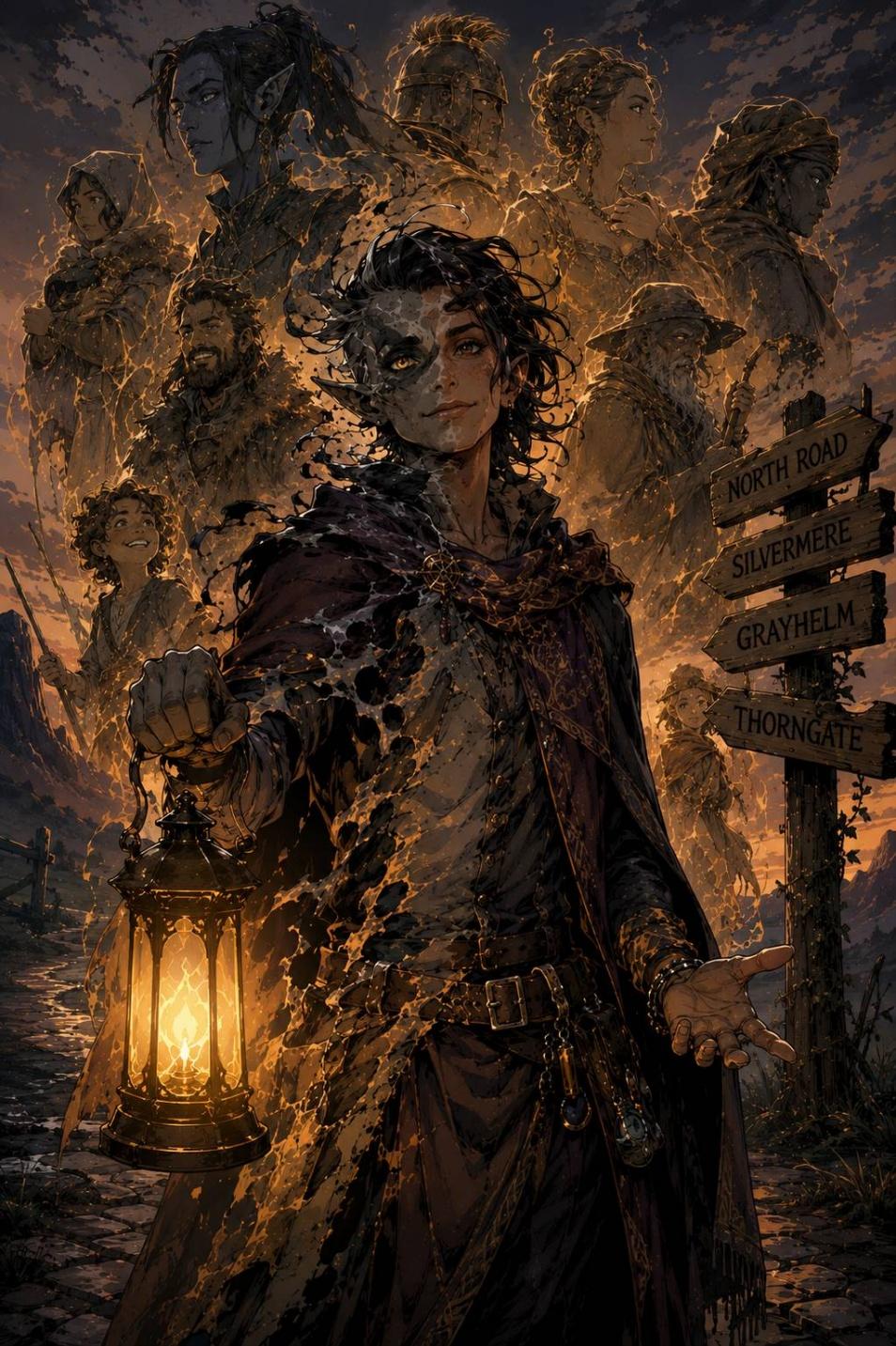
Epithet: The Wayfinder, The Road’s Own
Race: Changeling (presumed)
Era: Unknown — accounts span approximately 500 AF to present
No one knows if the Wayfinder is one person, several people, or something else entirely. The accounts span fifteen hundred years, which is longer than any mortal changeling lifespan — but changelings who specialise in taking different forms are notoriously difficult to track, and the Pathfinders’ archivist who compiled the known accounts noted with professional frustration that about forty percent of them could theoretically be explained by a sufficiently motivated series of imitators.
The consistent elements across all accounts: a figure of changeable appearance, always at a crossroads or a difficult point in a journey, always apparently happy to help, always in possession of specific and accurate knowledge about the road ahead. They have never asked for payment. They have never given a false direction. They have been described, in aggregate, speaking at least eleven languages and demonstrating familiarity with roads that were not yet built when the account was recorded.
Three accounts explicitly describe the Wayfinder as knowing the names of the traveller’s relatives without having been told them. One account, from 2801 AF, describes them as knowing about an event that had not yet happened by the time the account was written. The Pathfinders have classified this account as unverified but have not discarded it.
Legacy: The traveller’s tradition of leaving tokens at crossroads for those who are lost may derive from attempts to thank the Wayfinder in absentia.
Adventure Hooks
- The Wayfinder apparently still appears. They have been reported three times in the last decade in locations that form a pattern on the Pathfinders’ Vault tracking maps.
- What they are is completely open — and they have apparently been watching the world for fifteen hundred years.
- An account from 2801 AF describes them referencing a specific future event. That event has now happened. The account describes what comes after.
The Souled Physician
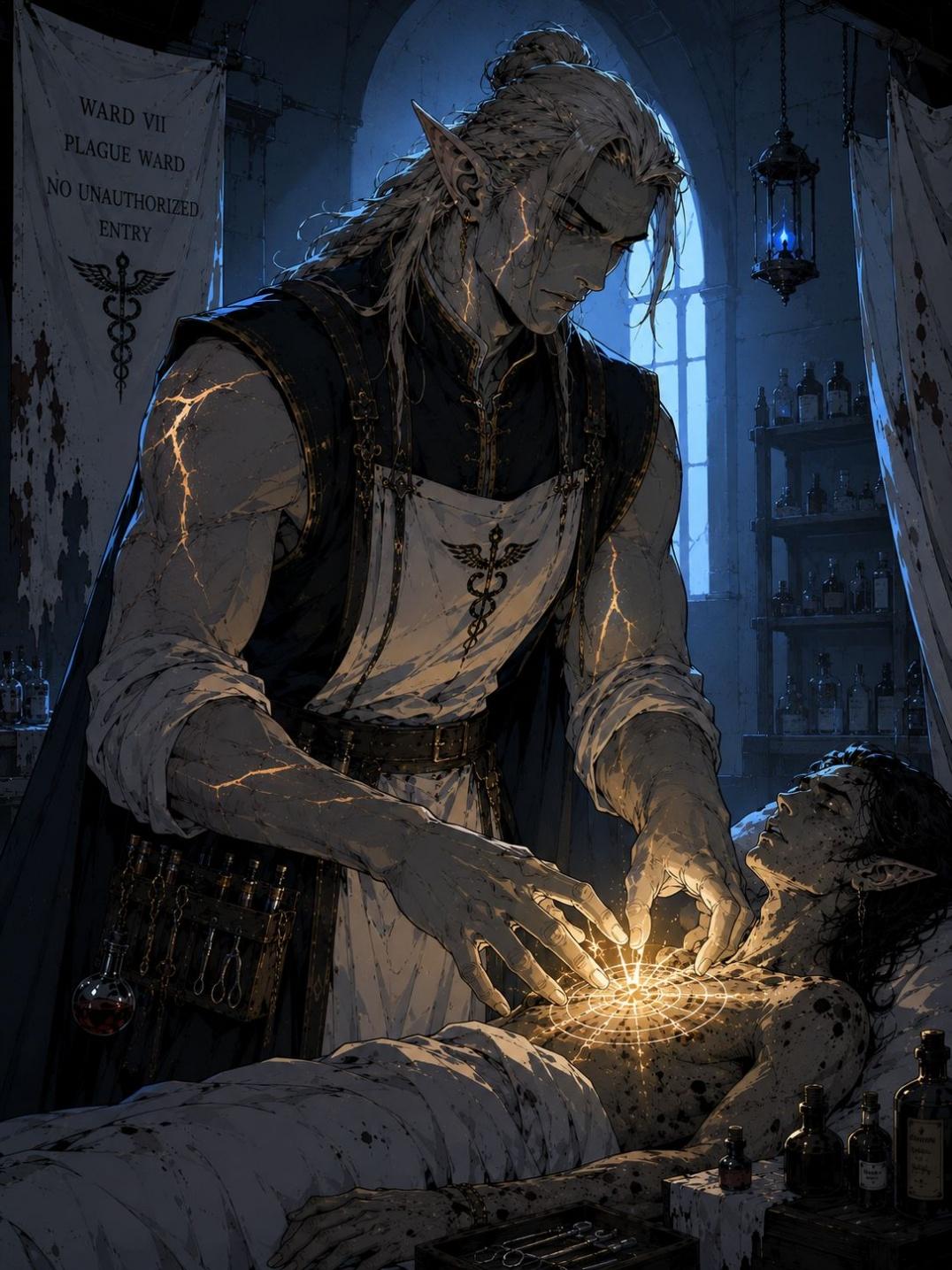
Epithet: The Souled Physician, The Willing Doctor
Race: Vampire
Era: Age of Recovery through Modern Age — last confirmed account 2900 AF
The Souled Physician is notable for several reasons, the most straightforward of which is that they are a vampire who has spent at least six hundred years healing people. The tension in that fact is not something the Physician has ever publicly addressed. The dark elves who worked with them for several decades describe an individual who was deeply aware of their own nature, who managed it with a combination of discipline and what their colleagues called genuine ethical conviction, and who found the work of healing a sufficient reason to keep managing it.
They worked primarily with the dark elf communities in the early centuries of their recorded activity, then began ranging further — turning up in plague zones, epidemic sites, and magical disease outbreaks across the Isles. They were, by most accounts, the only practitioner willing to enter the worst situations without asking what was in it for them.
The last confirmed account dates to 2900 AF — a brief appearance during the investigation into the weakening Outer God prisons, providing medical support to an Ebony Order team that had encountered something that left several members with symptoms no one recognised. The Physician identified the symptoms, provided treatment, and declined to explain how they knew what they were dealing with. They have not been seen since, or have not been recognised.
Legacy: A record of treatment and survival in situations that should have produced no survivors.
Adventure Hooks
- They are probably still alive. A vampire with six centuries of medical experience who knows something about the weakening prisons that they did not share.
- The symptoms they identified in 2900 AF — what were they? What does it mean that someone already knew what they were?
- The dark elves of Celesphain maintain records of the Physician’s early work. Some of those records contain observations about the state of the Greylands that are difficult to explain.
Solenne Asp — The Lost Mage

Epithet: The Lost Mage, The Light in the Ring
Race: Halfling
Era: Modern Age, approximately 2400–2500 AF
Solenne Asp became obsessed with the asteroid ring — the debris left by the Fracturing that circles the planet at a distance no winged creature and no known teleportation magic had ever been able to reach. The obsession began academically, in the Bronze Dragon Province’s Aurumspire Institute, where Asp’s doctoral work on the residual magical properties of the ring’s constituent matter was considered promising and slightly alarming in equal measure.
The transition from academic to engineering project took approximately fifteen years. Asp built, in a series of workshops outside the Institute’s jurisdiction, a device they described in their notes as a propulsion mechanism using compressed magical force to achieve escape from the surface. The notes are available in the public sections of the Aurumspire library. They are also, several senior arcane engineers have confirmed, theoretically sound.
The launch was witnessed by approximately forty people, none of whom had been told it was happening. The device worked. Asp ascended. The device, apparently, did not include a reliable mechanism for returning.
There is a small light in the asteroid ring that was not there before. It has been observed by every astronomer who knows to look for it. It moves.
The Arcane Senate has classified the launch as an unauthorised experiment and declined to organise a retrieval mission on the grounds that no retrieval mechanism exists. The Bronze Dragon Province has quietly funded three attempts to develop one. None have succeeded yet.
Legacy: Proof that the ring is reachable. A person still up there. A light that moves.
Adventure Hooks
- The Bronze Province retrieval programme is on its fourth attempt. It needs something the previous three lacked.
- Asp’s notes describe what they expected to find in the ring. They also describe what they thought the ring actually was — a theory that the Arcane Senate found alarming enough to attempt to suppress.
- Asp has been in the asteroid ring for approximately five hundred years. If they are still alive, they have had five hundred years to find things worth finding. If they have found something, there may be a way they can communicate it downward.
See Also
- NPC Directory — full quick-reference for all named characters
- Saints — the saints, who occupy a different category of historical significance
- Full Timeline — where each figure sits in the broader history