The Saints
Sainthood is not a reward for piety. The gods do not grant it to those who prayed most diligently or followed the correct rituals most carefully. It is granted to those whose lives became a demonstration of something — a principle lived rather than preached, a sacrifice so complete that it stopped being sacrifice and became simply what the person was.
Upon death, all souls are offered a choice by the Ceaseless Mother: step through Kindra’s flame for rebirth, or seek rest in the Greylands. Saints receive a third option — the chance to remain in the world as something more than they were, serving a divine purpose. Whether they accept is their choice. Not all do.
Saint Celzala
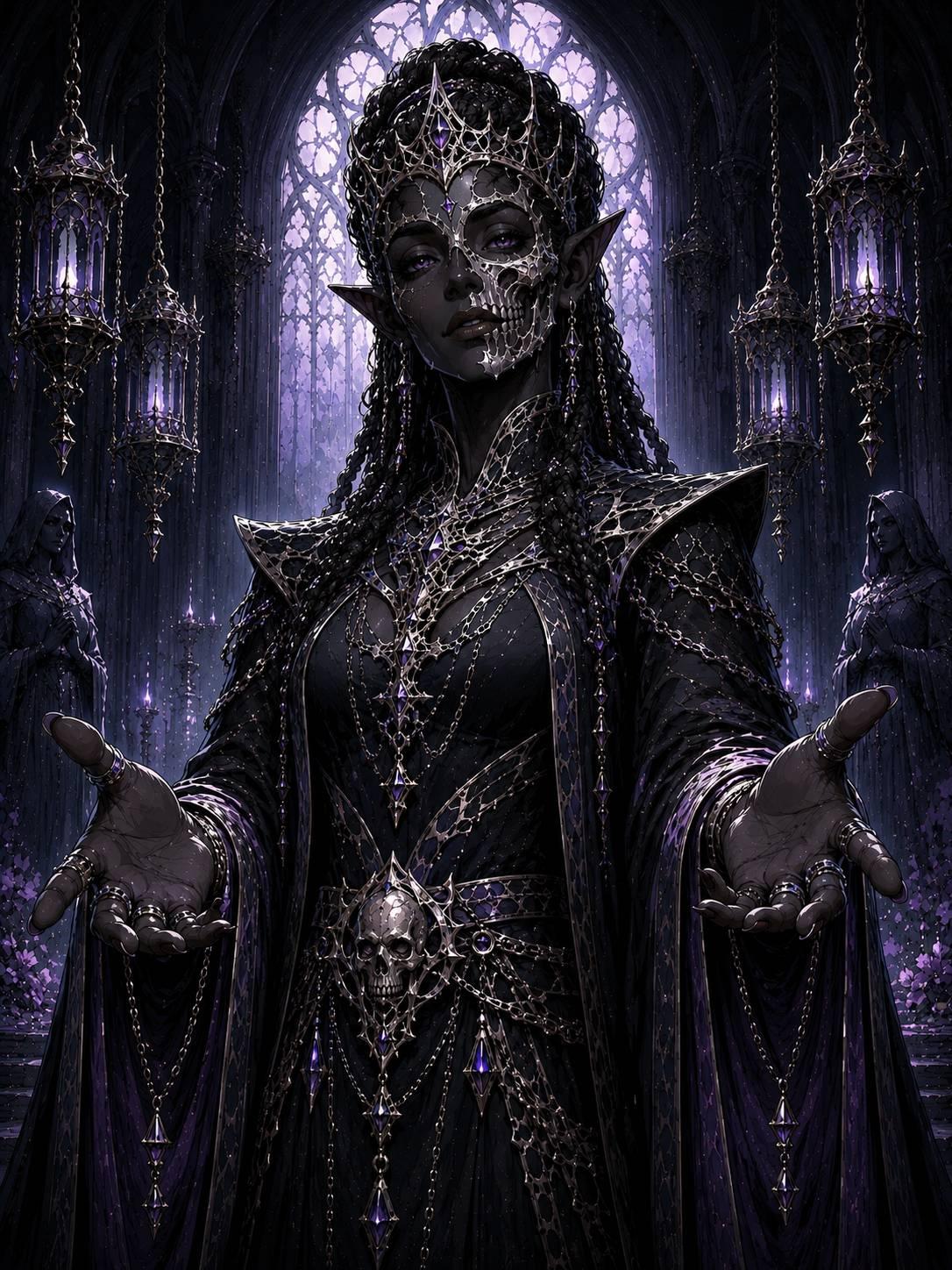
Domain: Rebirth, safe passage, transition
Race: Dark Elf (formerly High Elf)
Era: 10 AF
Patron God: Moran
When the Fracturing came and the elven nobility locked their doors, Celzala opened theirs. A leader of one of the great elven houses, they took their house’s resources and turned them entirely toward care: field medicine, death-bed companionship, the work of being present with people dying in the aftermath of a war their own culture had caused. They sat with the dying of every race — including humans and gnomes who had good reason to look at an elf with hatred.
For this, the gods transformed them. Celzala’s house became the dark elves — the silver-consuming metal stopped spreading before it consumed them entirely, and was shaped into something beautiful. Each member of the house was given an element of unnatural beauty to ease the fear of those facing death. Celzala themselves became the guide of souls — the figure who meets the dead at the boundary between the world and the Greylands.
Worship: Silver coins placed over the eyes of the dead. Healers weave the dark elf house symbol into their uniforms. Travellers carry amulets engraved with a silver skull — not as a death wish, but as acknowledgement that Celzala walks with them.
Saint Zaivine
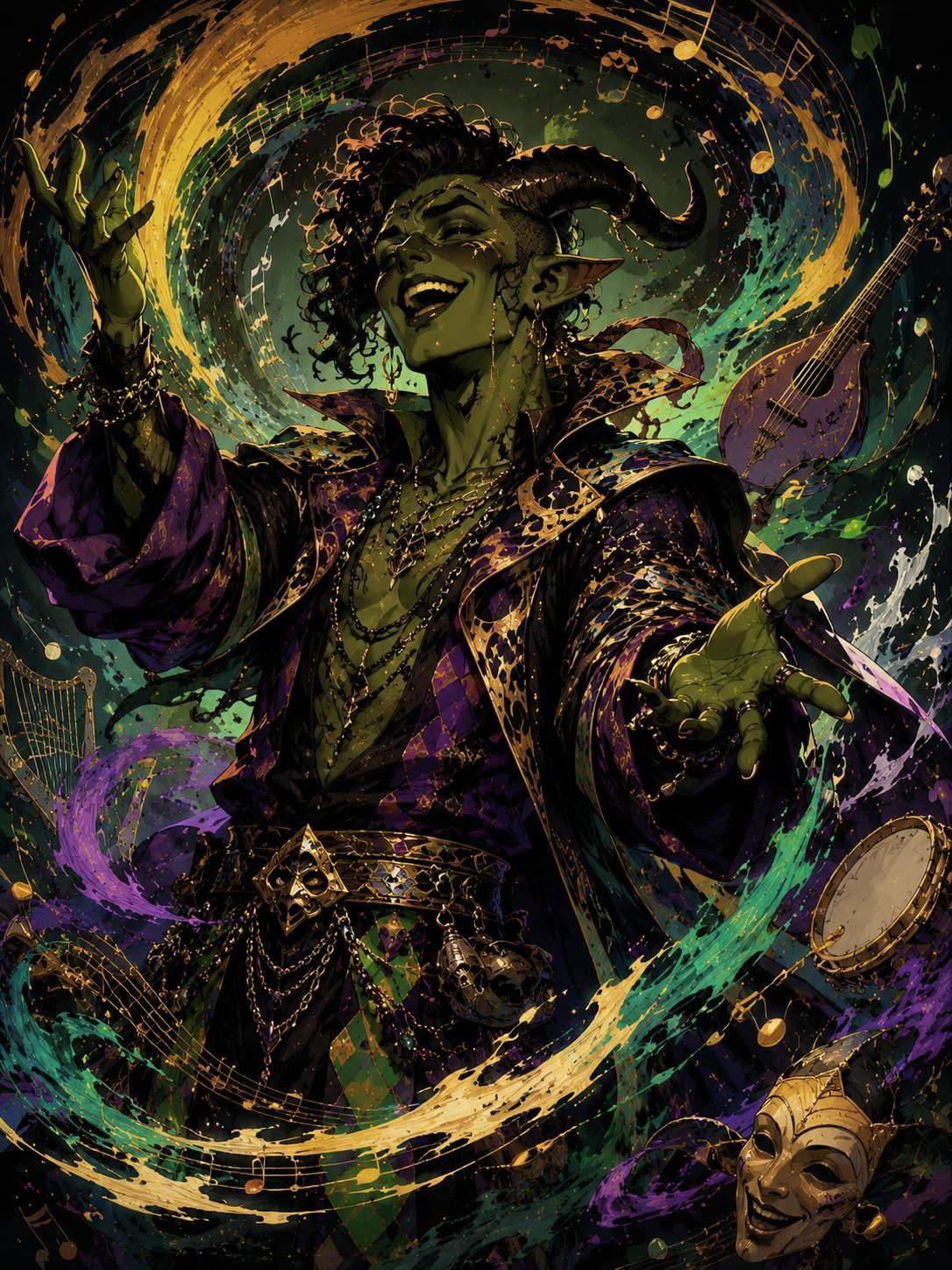
Domain: Inspiration, creativity
Race: Tiefling
Era: 9700 AB
Patron God: Neithona
A working bard and painter who travelled the Isles performing for crowds from royal courts to field hospitals to rough taverns. Distinguished not by extraordinary skill alone, but by attention — Zaivine noticed who was suffering and made work that spoke directly to it. Not comfort, but recognition. Sainthood came from a lifetime of small deeds: songs written for grieving cities, paintings donated to communities that had nothing beautiful left, performances given free of charge.
Worship: Artists make a deliberate mistake at the start of any new work — a signature imperfection acknowledging the gap between vision and execution. Those seeking inspiration are encouraged to look for it in service rather than isolation.
Saint Farion
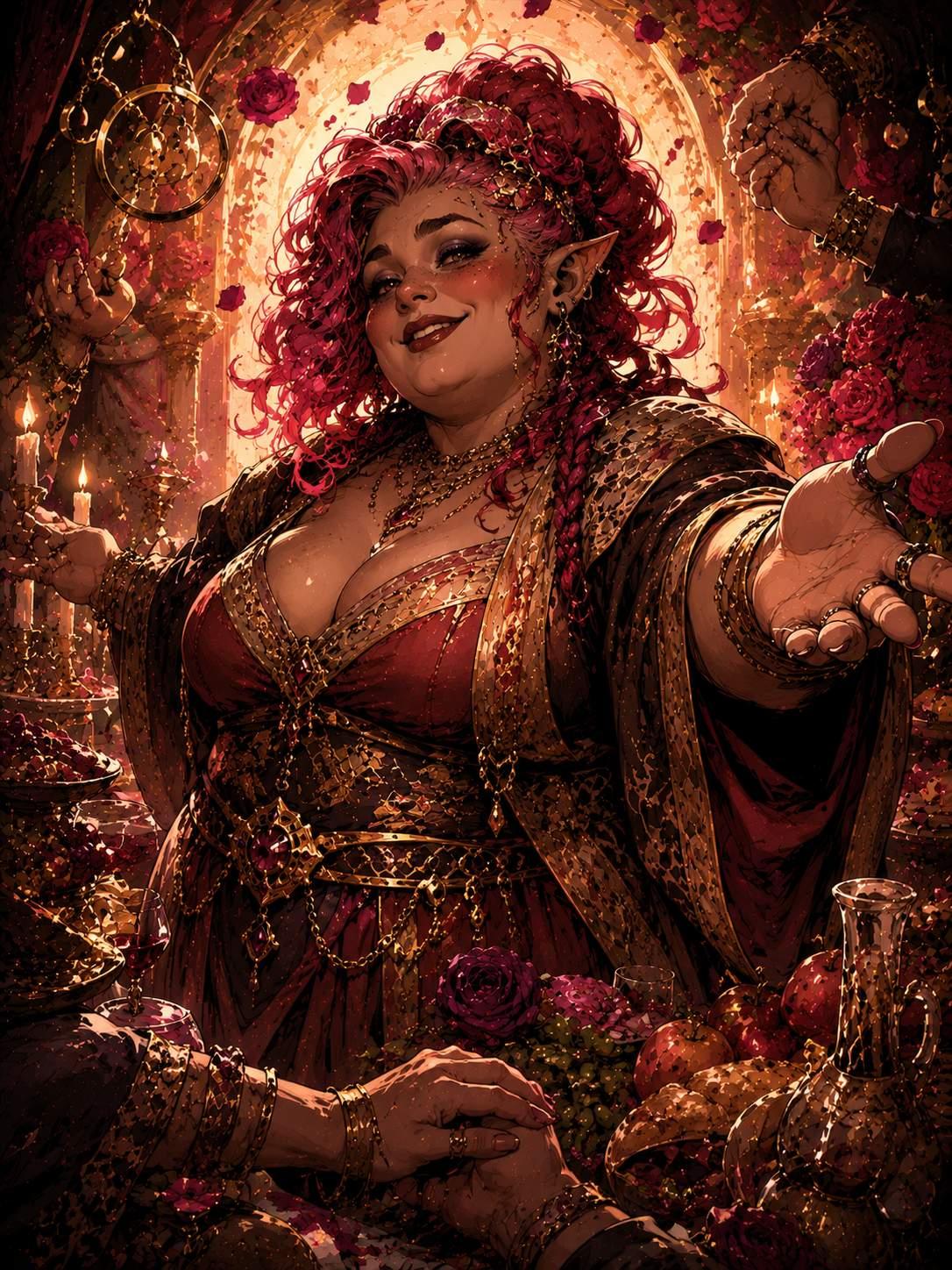
Domain: Love, connection, union
Race: Deep Gnome
Era: 9750 AB
Patron God: Vitasaol
The deep gnomes had been fighting each other for centuries by the time Farion emerged. Farion united them not through conquest but by demonstrating that creation and technology were better tools of connection than competition. The multiple marriages for which Farion is remembered were not expressions of romantic ambition but of diplomatic genius — forming bonds across factional lines and maintaining them, building a web of relationship that turned hostile groups into a community.
Worship: Meals are always eaten with others — to eat alone is not a sin but a missed opportunity. Wedding ceremonies invoke Farion’s name and emphasise the community being built. Empty seats at gatherings are left as invitations for those not yet known to the group.
Saint Tothiri
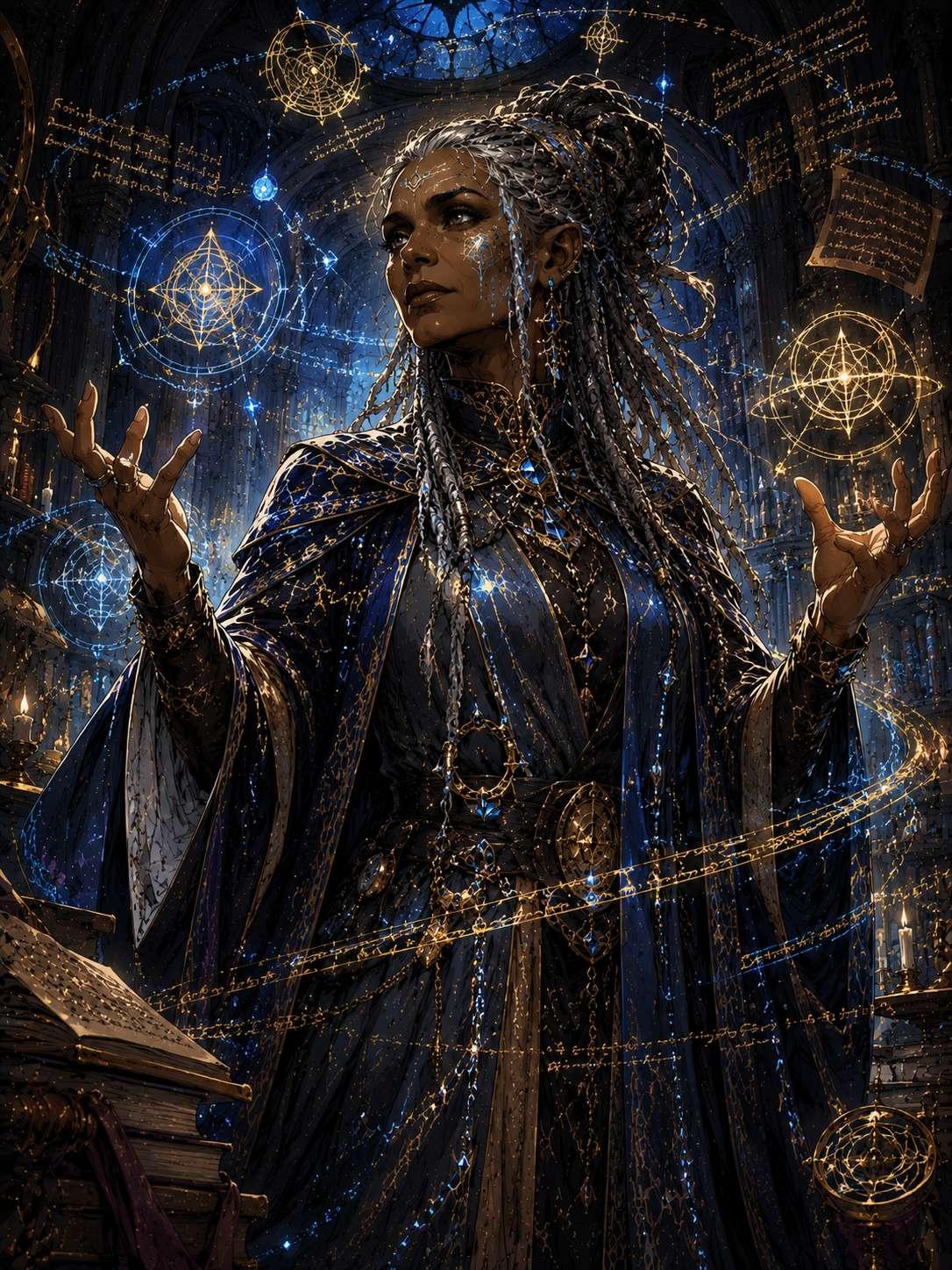
Domain: Knowledge, the arcane, secrets, solitude
Race: Human
Era: 9900 AB
Patron Gods: Shangotha, Kindra
The first human to decode the magical systems of the dragons and Eioran — the first to understand magic structurally enough to teach it systematically. Built the first university. Trained the first generation of non-draconic sorcerers. Helped negotiate what became the Concord of Seven.
Then spent the second half of their life building the Ebony Order and locking things away. Not because magic was wrong, but because Tothiri had seen what happened when the wrong magic reached the wrong hands. The saint of knowledge became the saint of secrets not despite their commitment to learning, but because of it.
“This is the tension in Tothiri’s legacy that the Order still wrestles with: the woman who gave the world magic also decided, in the same breath, that some of it needed to be taken back.”
Worship: Scholars write questions and burn them on candles, trusting the smoke carries the need upward. Libraries in Tothiri’s tradition are always open — to the desperate, the curious, the lost. At festivals, secrets are written and burned by clergy, not to erase them but to lift the burden of carrying them alone.
Saint Bricwar
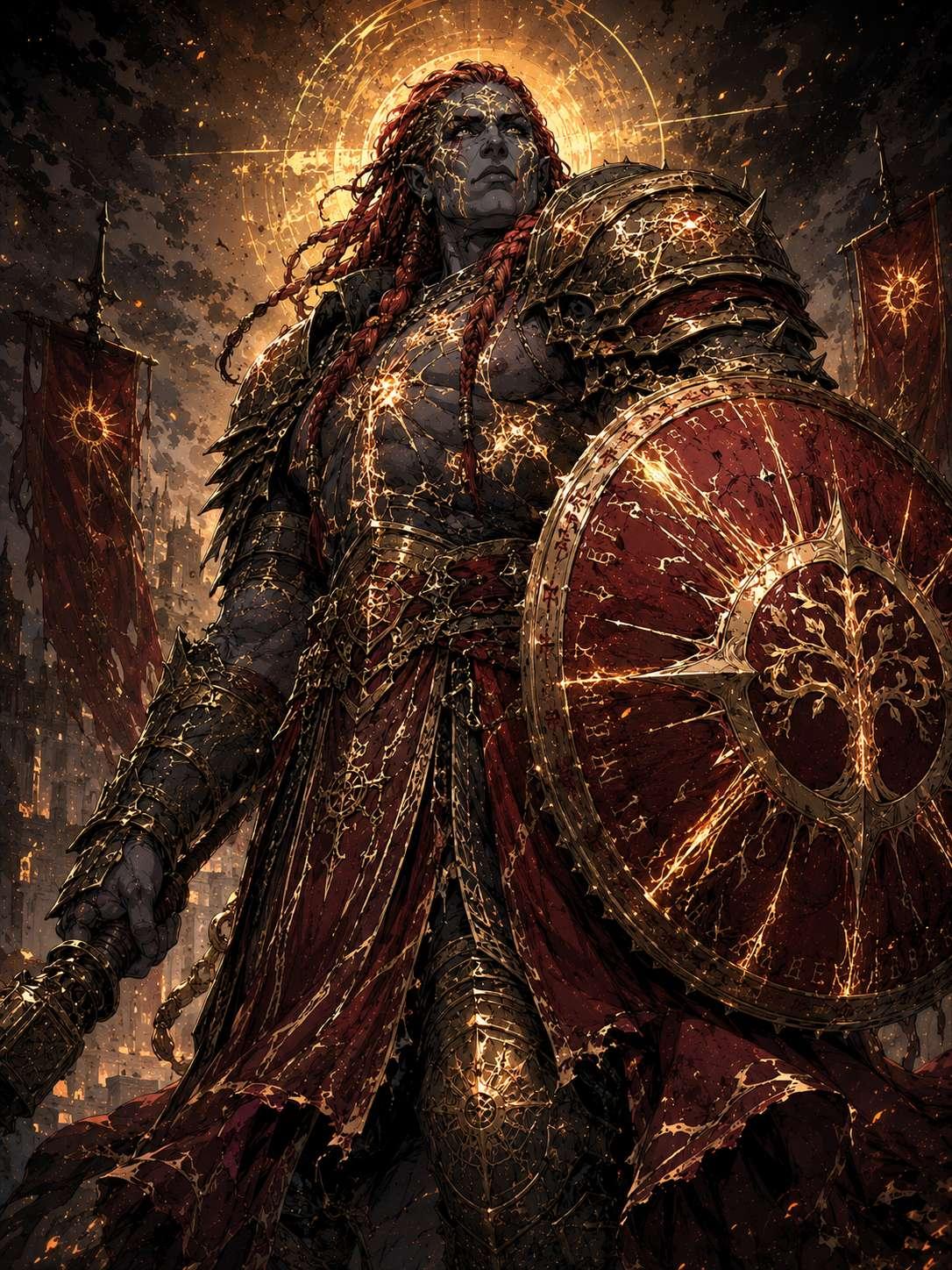
Domain: Protection, freedom, honourable battle
Race: Giant
Era: 25 AF
Patron God: Theran
King of the giant forces who fought alongside the dwarves and dragons to close the rifts opened by the Fracturing. The glowing scars in every depiction are real — earned in the final battle from creatures that should not have been possible to wound. Fell in the last day of rift-sealing and was granted sainthood in recognition of a life spent protecting those who could not protect themselves.
The scars passed to Bricwar’s descendants — among the most significant markers of giant lineage. In the wider world, Bricwar is the patron of soldiers who understand what battle costs.
Worship: Weapons engraved with Bricwar’s symbol as a reminder they should not be drawn in anger — only in defence. Shields bear the saint’s mark. Soldiers deploying to conflict are given symbols by their families representing both the protection wished for them and the community they fight for.
Saint Loujar
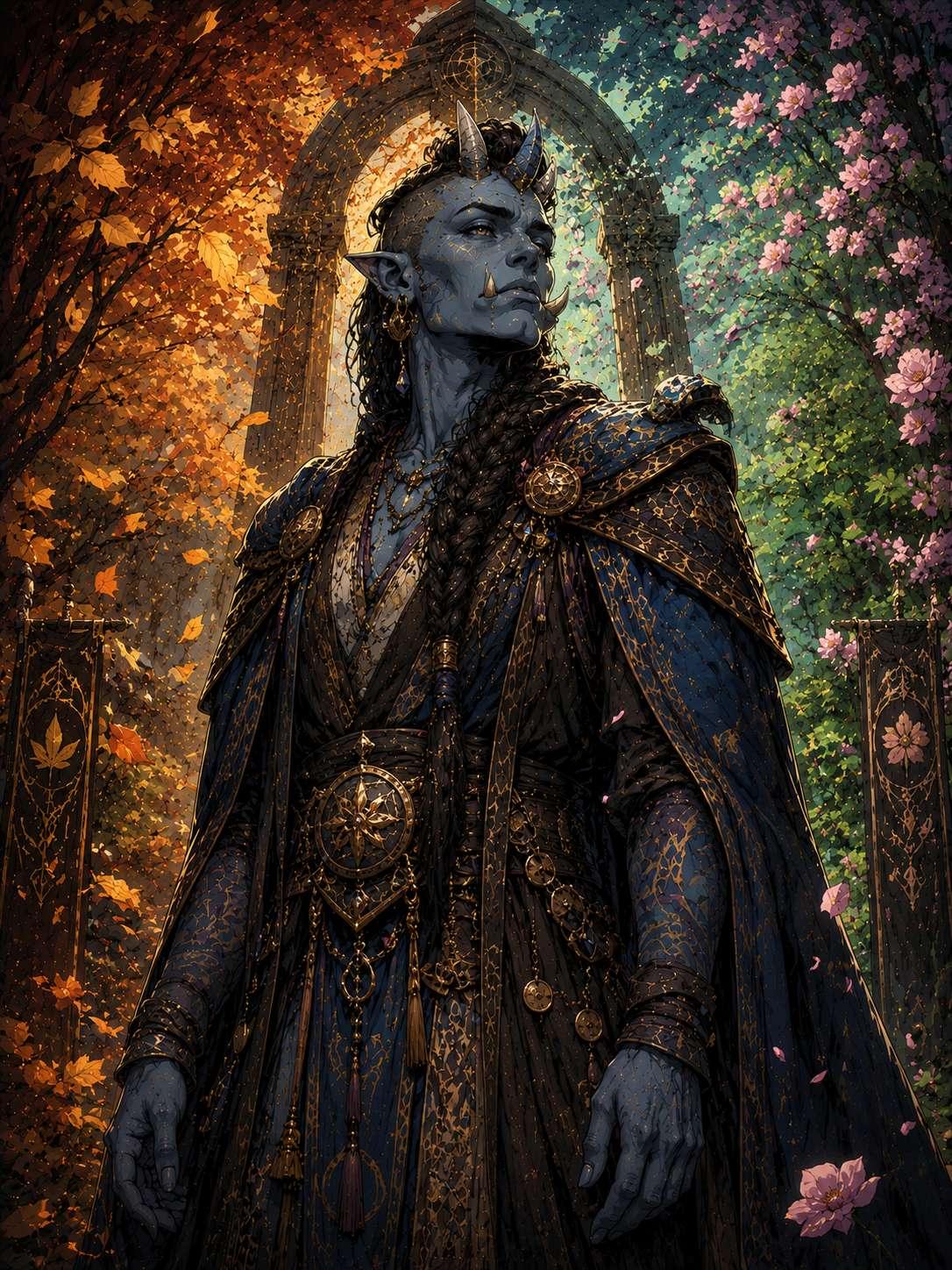
Domain: Destiny, change, new beginnings, the turning of seasons
Race: Orc
Era: 9880 AB
Patron Gods: Neithona, Kindra
The orcs were, for most of history, perceived as creatures of rage — their genuine culture of honour, wisdom, and communal protection invisible to those who only looked during conflicts. Loujar changed that through the patient work of demonstration: showing over decades what orc civilisation actually was.
The pact that earned sainthood was unusual — Loujar asked for sainthood not for themselves but for their people: the capacity to be recognised as the thoughtful, honourable, complex beings they were. Loujar became the saint of new beginnings, the herald of changing seasons, the figure who guards the flame through which reborn souls pass.
Worship: Old possessions burned or given away to mark new beginnings. Dramatic personal changes celebrated: new hairstyles, new names, new careers. Those who wish to leave behind mistakes write them down and bury them, the paper becoming part of the earth.
Saint Varelis
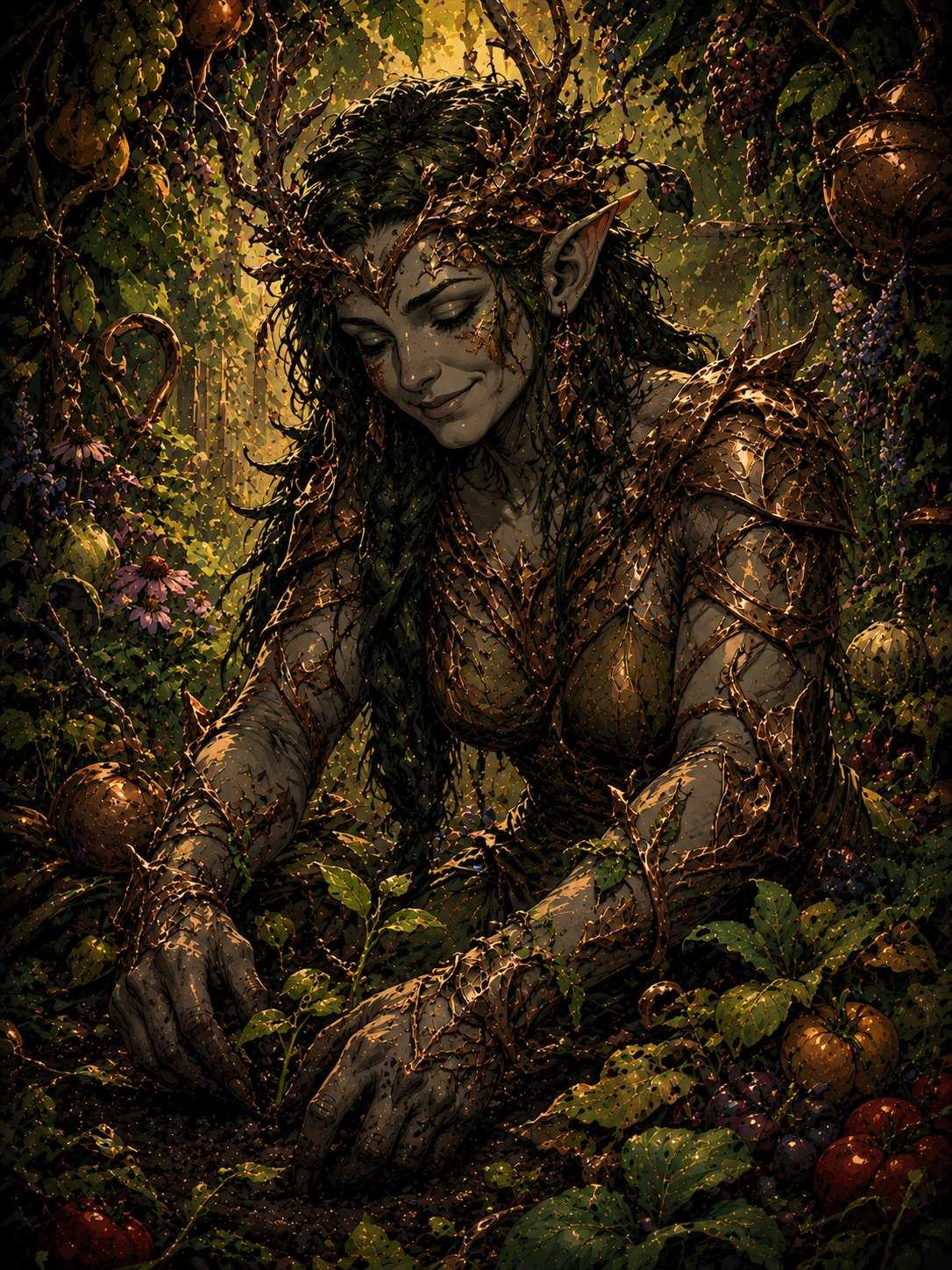
Domain: Bounty, harvest, nature, agriculture
Race: Wood Elf
Era: 9650 AB
Patron God: Vitasaol
When the elven empire began its crusade, Varelis led the wood elves out of it. Unable to stop the army, they chose instead to go where its effects would be worst — to the settlements of the newer races being driven from their agricultural lands — and teach farming: how to grow food in difficult conditions, how to store it, how to work with the specific land available.
The bronze metal that replaces elven flesh in Varelis’s line can be shaped by its bearer — worked into armour, jewellery, or, in the case of the oldest wood elves, a complete metallic carapace allowing them to continue as protectors of the forests they have spent their very long lives tending.
Worship: The first fruit of each harvest returned to the wild — left at the forest edge, offered back to the land that produced it. Grand harvest feasts held in Varelis’s name. The spirit of the worship is gratitude rather than petition.
Saint Aestri
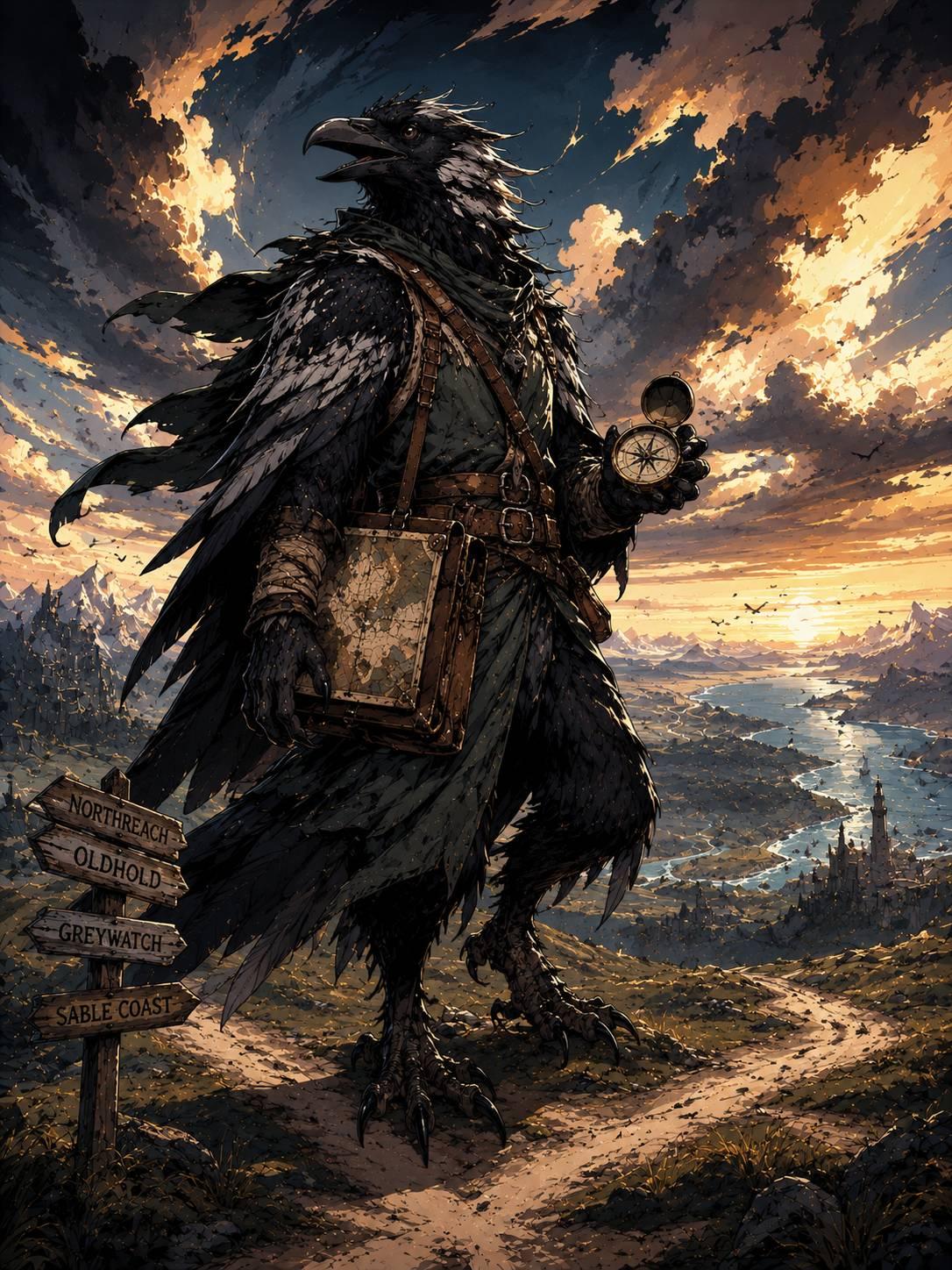
Domain: Roads, travel, discovery, exploration
Race: Aarakocra
Era: 7900 AB
Patron God: Ventis
Born into a migratory flock and never stopped moving. Over twenty years — the entirety of a working adult life — Aestri mapped the Fractured Isles completely, flying routes no one had flown before, landing in territories that had never seen an aarakocra. The maps returned on their final journey home are still the foundation of the Pathfinders’ cartographic tradition.
When they died of old age, having never stopped in one place long enough to rest properly, Ventis carried their soul to sainthood on the same currents they had spent their life riding.
Worship: Travellers place feathers or small tokens at crossroads for those who have become lost. Explorers carve Aestri’s sigil into their compasses. Prayers for the safe return of those who have not come back when expected invoke Aestri’s name.
Saint Merrow
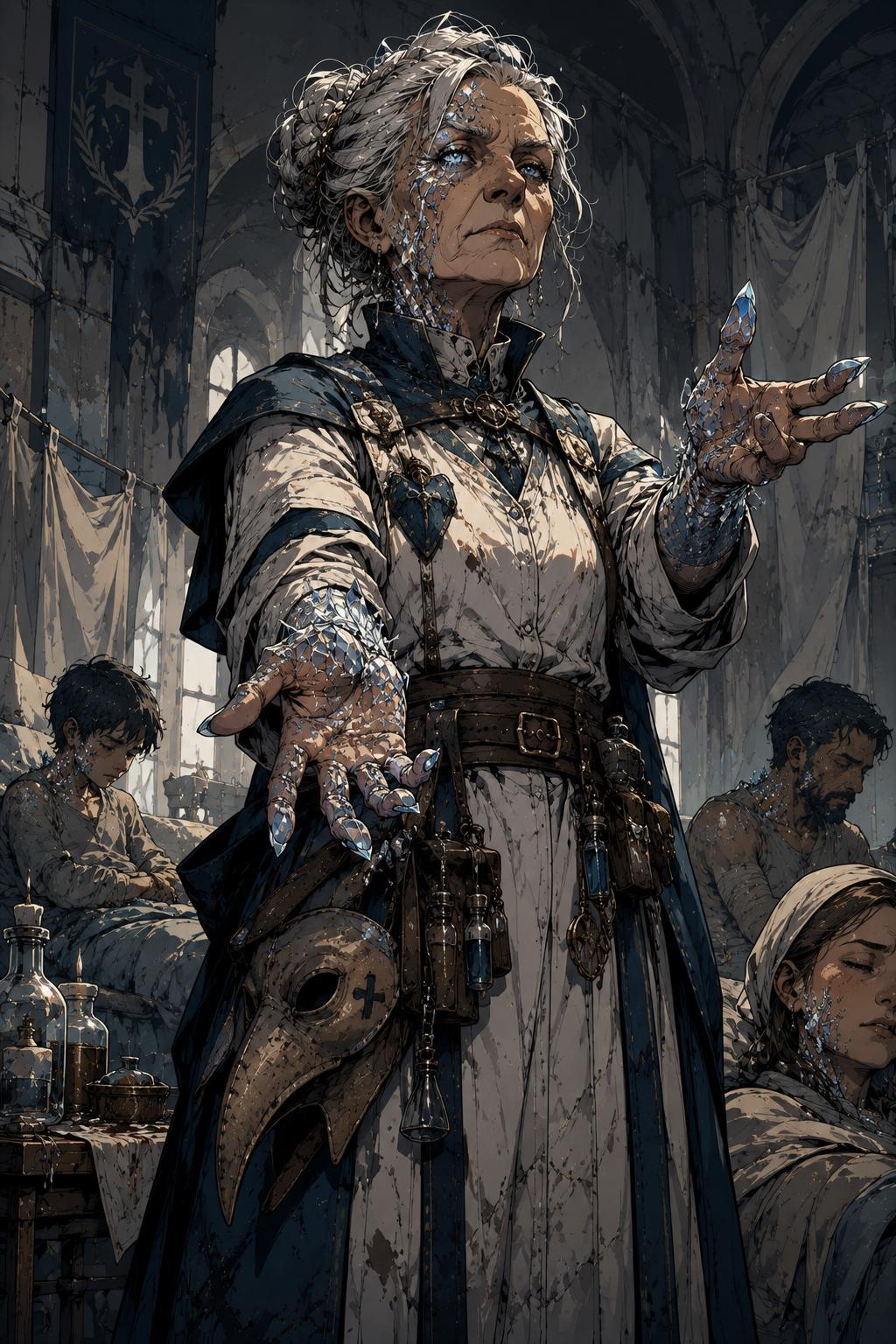
Domain: Healing, recovery, perseverance in care
Race: Human
Era: 8450 AB
Patron God: Vapos
The Crystal Plague emerged from magical residue of the Draconic Infraction. Its effects were varied and terrible: progressive crystallisation, uncontrolled chitinous growth, episodes of violent mania. Merrow chose to be present with that suffering for their entire career, travelling from city to city treating whoever was in front of them regardless of race or income, working in parallel on the eventual cure.
By the time the cure was confirmed, Merrow had the plague themselves — their body crystallising from the hands upward. They continued treating patients until they physically could not. Vapos descended to lift them to sainthood and, as a secondary act, cleansed the plague from the areas Merrow had worked in. This is the only record of a New God taking direct physical action in the material world.
Worship: Hospitals maintain shrines to Merrow. Healers carry crystal pendants infused with healing magic. Clean water and medicine are left outside temples or given to those in need without expectation of return.
Saint Korden
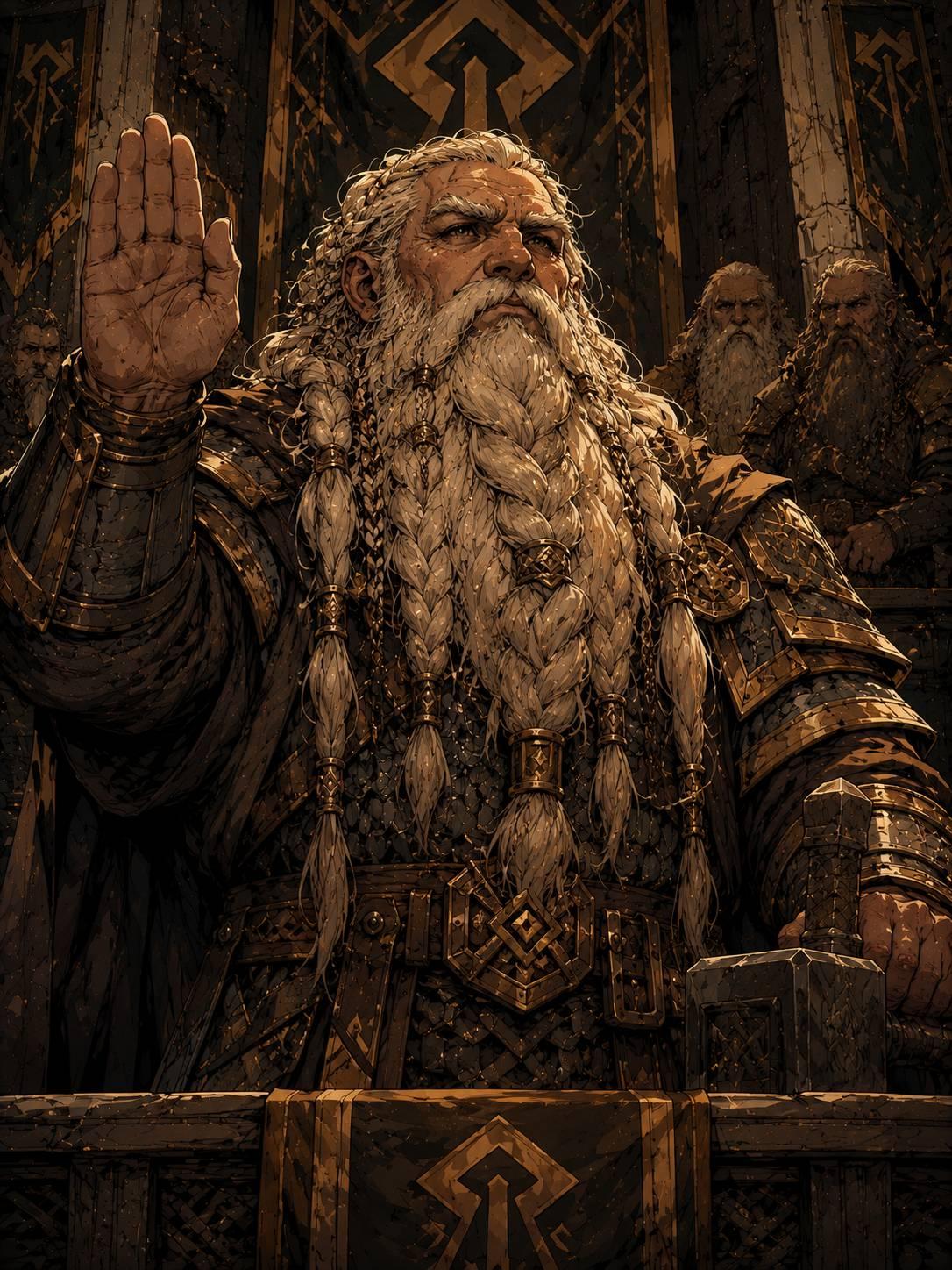
Domain: Justice, duty, accountability
Race: Dwarf
Era: 7600 AB
Patron God: Shangotha
Heir to a significant dwarven house, Korden inherited wealth, political influence, and practices that had drifted from the values they were supposed to serve. The mines were profitable. The workers were not treated as if that mattered.
Korden named what was happening — including within their own family — and demanded it change. When the rebellion succeeded and Korden was offered the seat of power they had fought for, they declined it. “Justice exists to serve people, not to give those who achieve it somewhere comfortable to sit.” This act — the refusal of the prize — is what the gods found worth acknowledging.
Worship: Judges and Inquisition members invoke Korden’s name before trials. Witnesses swear on stone with Korden’s name invoked. Rebellions against corrupt power have been conducted under Korden’s banner with enough frequency that the saint’s symbol on a protest banner carries a specific and loaded meaning for those in authority.
Saint Ysolde
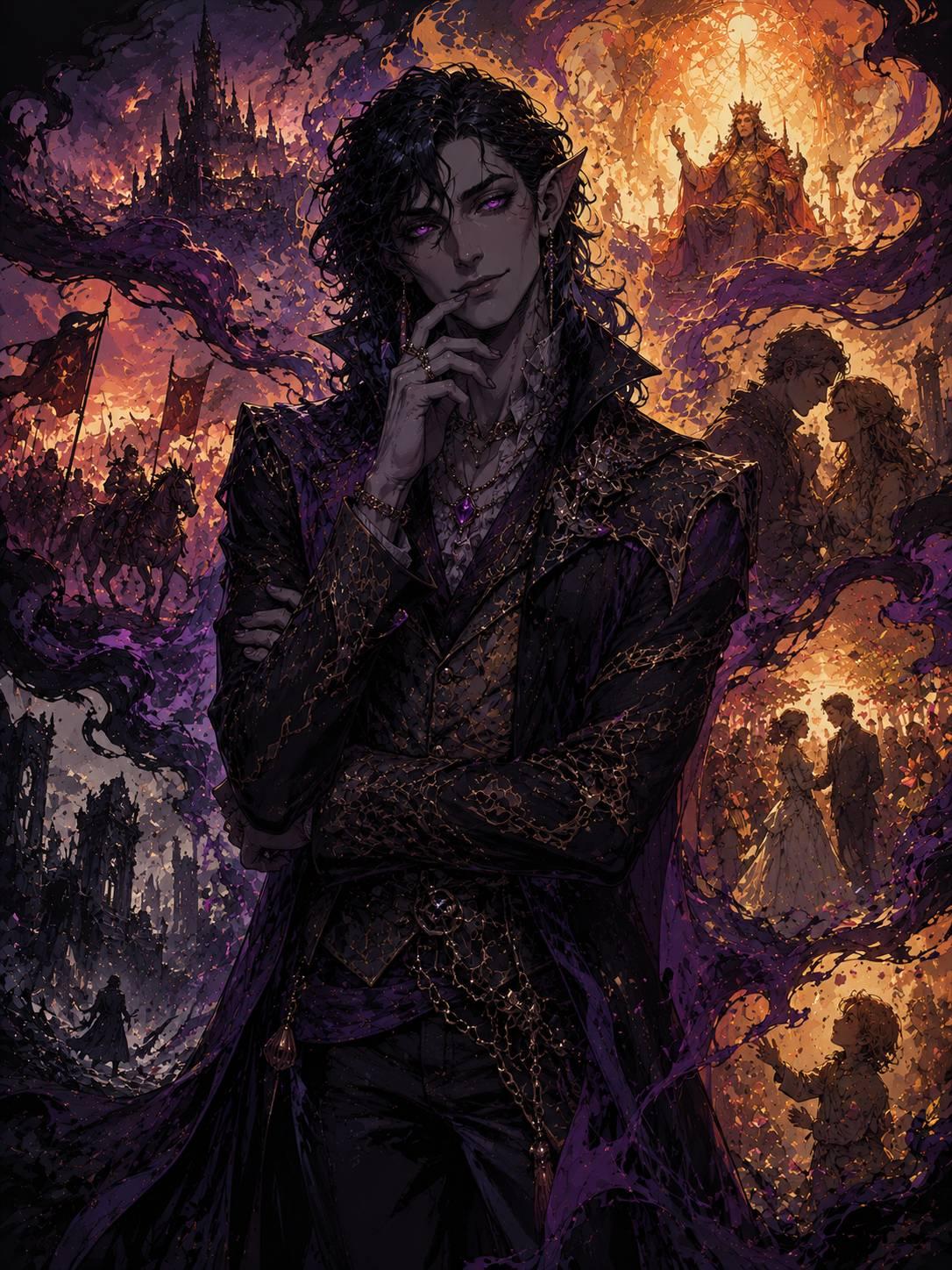
Domain: Dreams, revelation, prophecy
Race: Changeling
Era: 9200 AB — disappeared
Patron God: Neithona
Became a prophet involuntarily. A celebrated painter whose work began to change — not images, but predictions. A scene of a flood, three months before the flood. A portrait of a soldier’s knighting, eight months before the ceremony. A city burning, four years before the fire — with all architectural details precisely accurate.
Ysolde chose, as carefully as possible, to use the visions to prevent catastrophes. The Chromatic Inquisition disagreed with several of their methods. That disagreement was never resolved.
After completing the final painting — five figures, an elemental cataclysm, titled The End of All — Ysolde disappeared. No body was ever found. The painting remains in the Brass Dragon Grand Library under the highest level of restricted access.
“The Order has confirmed that three of the five figures in it match descriptions of people currently alive. This is not publicly known.”
Worship: Artists burn work in Ysolde’s name as offering and practice. Prophets and seers maintain shrines containing reproductions of the final painting. Followers keep dream journals and treat them as sacred documents.
See also: Ysolde’s Final Painting (DM Only)
Saint Eloris
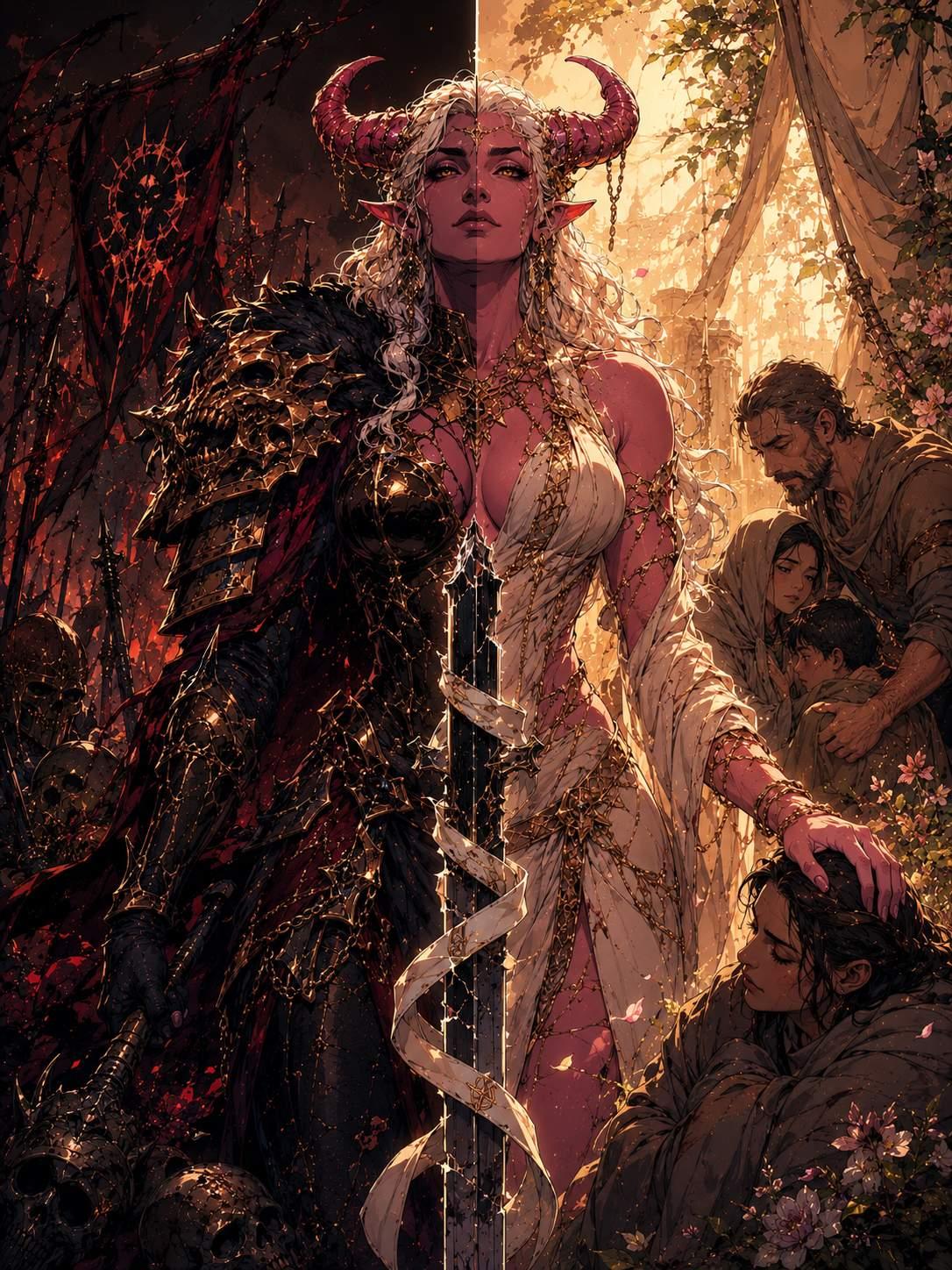
Domain: Mercy, redemption, second chances
Race: Succubus
Era: 9850 AB
Patron God: Moran
The most widely venerated saint in the Fractured Isles — not because of the deeds, but because of the starting point. Eloris was, for the first half of their life, precisely the kind of person one does not expect to become a saint. They ran the weapons trade on both sides of the Weeping Crusade, played the conflict for profit with cold professionalism, and built considerable wealth on the foundation of other people’s suffering.
The town that changed them was not special. It was simply the first time they witnessed, at close range and without the insulation of distance, what the weapons they sold were used for. They spent the remainder of their life using their wealth and organisational skills and eventually their own private army to undo as much of what they had contributed to as could be undone.
“Eloris is the saint who proves that sainthood is not for the pure. It is for those who choose, at whatever point they arrive at the choice, to go a different way.”
Worship: Venerated by soldiers, veterans, criminals, addicts, refugees, and fallen nobles. Followers write down their worst acts — not to confess them publicly but to hold them honestly. The symbol: a broken sword wrapped in ribbon — the weapon that will not be used again, bound with the intention to do otherwise.