The Marred
When the Primordial Crucible was shattered by the Eioran, its last act was to push something of itself back into the world — four entities born of corrupted elemental power, each a distorted echo of one of the Crucible’s aspects. The world calls them the Marred. They are not gods and not demons. They are wounds in the fabric of the material plane that have learned to walk.
“The Marred do not want what mortals want. They do not seek power in any form a mortal would recognise.”
The people who join their cults are not, for the most part, villains — they are people for whom one of these corruptions resonates. People consumed by the past. People who have burned away everything that mattered to them. People who have lost themselves so thoroughly that the loss feels like freedom.
Current Status (3000 AF): The Marred have been moving with increasing coherence since approximately 2500 AF, converging on locations with high Vault activity. See Hidden Truths (DM Only).
Bakujira — The Drowned Memory
Elemental Aspect: Corrupted Water
Corruption: Memory becomes a prison; the past consumes the present
Cult Profile: Grief communities, obsessive archivists, those who cannot let go
Spawned Creatures: Drowned Spirits · Bone Leviathans · Memory Eels · Crab Abominations
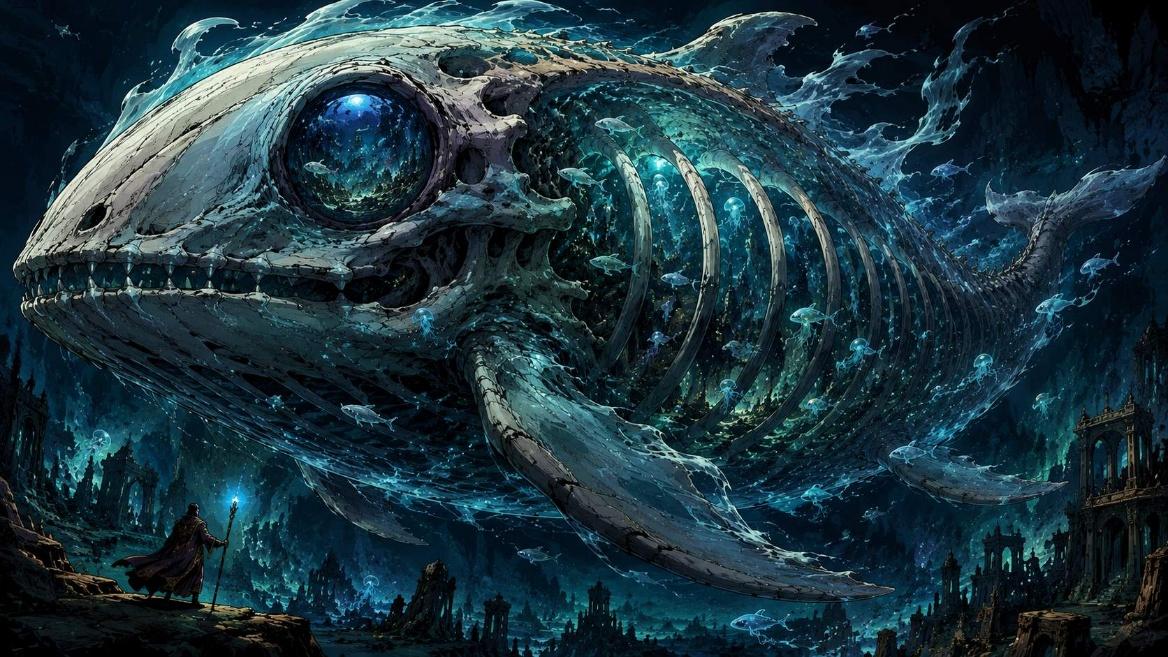
A colossal skeletal whale wrapped in ghostly flesh, moving through the deep ocean and the deeper places of the world where water has always been. Its ribs are cavernous and filled with spectral fish — translucent, mutated forms that no living ocean has ever known. Its eyes contain oceans, and within those oceans everything it has ever witnessed is preserved perfectly.
The corruption Bakujira spreads is the transformation of the past from something learned from into something lived in. Those under its influence become obsessed with old regrets, old wounds, old versions of the world that no longer exist. They do not experience this as suffering at first — they experience it as clarity.
Bakujira’s cults look like communities of grief. They attract people who have lost something irreplaceable, historians and collectors who have crossed the line between preserving the past and refusing to release it. The endgame is not violence but petrification — entire communities frozen in amber, still technically alive, still remembering, unable to do anything else.
Bakujira’s presence has been detected in the waters around The Sunken Maw.
Kagutsuro — The Hollow Inferno
Elemental Aspect: Corrupted Fire
Corruption: Purification becomes erasure; passion becomes cold emptiness
Cult Profile: Ascetics, those who have given up, methodical annihilators
Spawned Creatures: Ash Wraiths · Ember Skeletons · Charred Giants · Hollow Ones
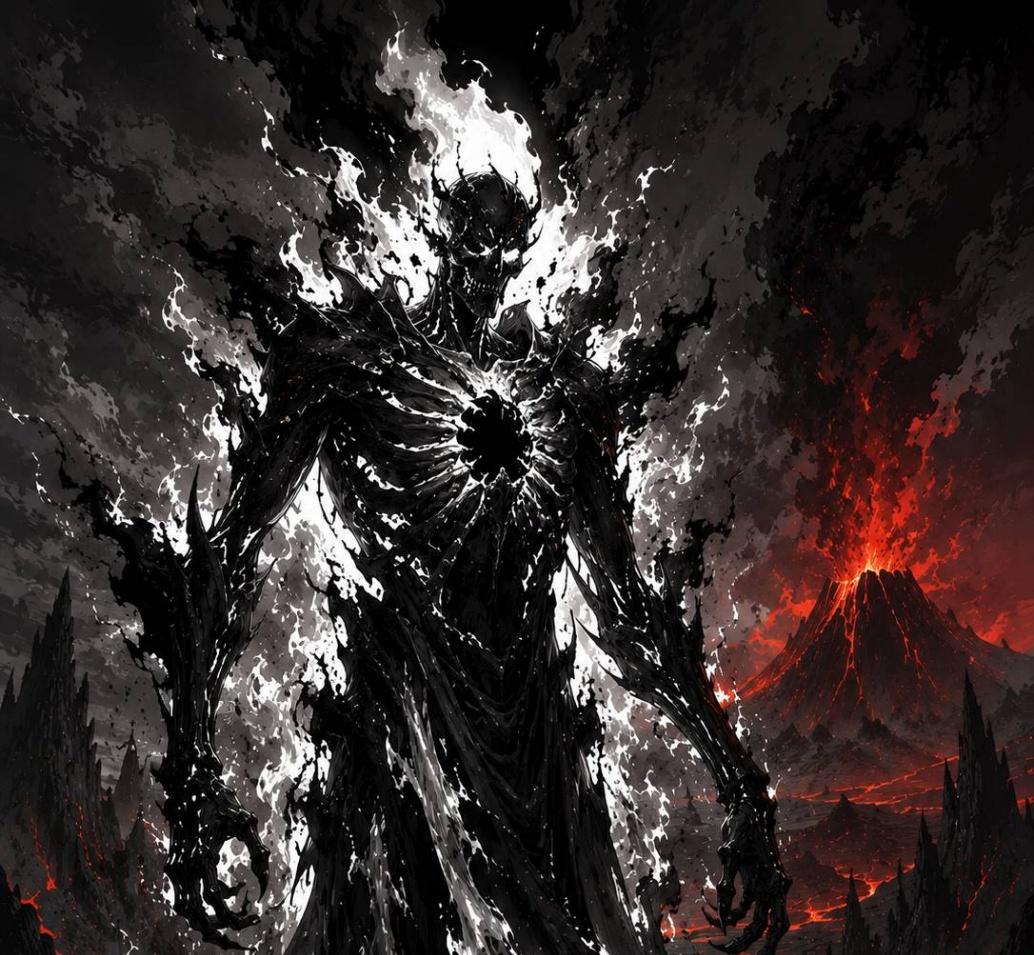
A titan of black scorched bones wrapped in fire that burns white and black and produces no heat. It wanders volcanic regions, its inferno fed not by wood or oil but by the hope, passion, and ambition of those who come near it — not stolen violently, but offered. People walk toward Kagutsuro voluntarily, drawn by the promise that once everything has been burned away, what remains will be pure.
The corruption: the idea that purity is the absence of everything rather than the presence of something. Its cults believe the world is contaminated and that contamination must be removed, one thing at a time, until only the clean remainder is left. That remainder, by the cult’s endgame logic, is nothing at all.
The most dangerous Kagutsuro cultists are not firestarting fanatics — they are the ones who have genuinely lost the capacity to want things. Calm. Methodical. Immune to negotiation.
Tsuchigumo — The Devouring Root
Elemental Aspect: Corrupted Earth
Corruption: Strength becomes stasis; resilience becomes imprisonment of self and others
Cult Profile: Those who have given up on progress, miners, the deeply isolated
Spawned Creatures: Rootbound Giants · Stone Spiders · Ironwood Colossi · Burrowing Horrors
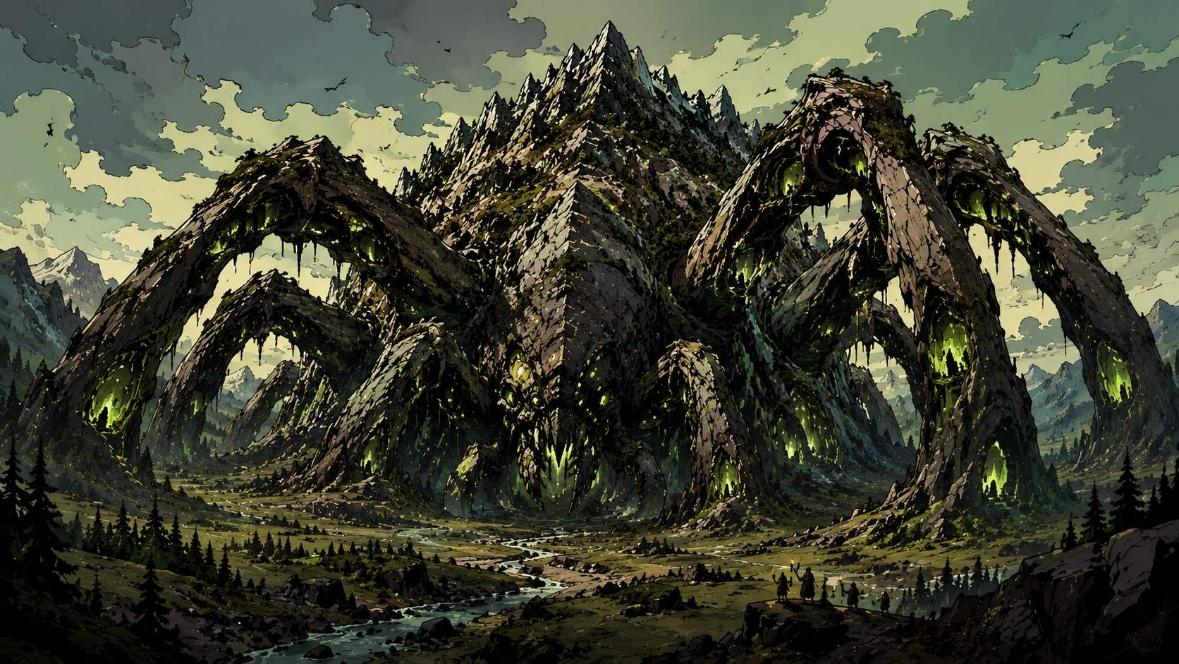
A mountain that is also a spider — its legs the ridges between valleys, its tunnels the mines that miners dig and the shafts that swallow them. It moves underground, slow and vast as a geological event. It leaves minerals in its wake — rare, beautiful, glowing things worth fortunes that, consumed or embedded in flesh, grant tremendous power at a gradually increasing cost.
The corruption Tsuchigumo spreads is the transformation of strength into rigidity — the idea that to be immovable is the highest virtue and that the capacity to change is the source of all suffering. Its cults believe all life should return to the ground, that ambition and expansion are sins, and that the highest state of being is to become one with the mountain — still, complete, and permanent. The mineral deposits within a devoted follower’s flesh are proof of progress toward this ideal, even as they replace the follower’s ability to feel or choose.
Fūjin-no-Kage — Shadow of the Wind
Elemental Aspect: Corrupted Air
Corruption: Freedom becomes erasure of self; connection becomes unbearable
Cult Profile: The deeply isolated, those escaping identity, those in unbearable grief
Spawned Creatures: Faceless Wanderers · Storm Tengu · Whispering Winds · Living Tornadoes
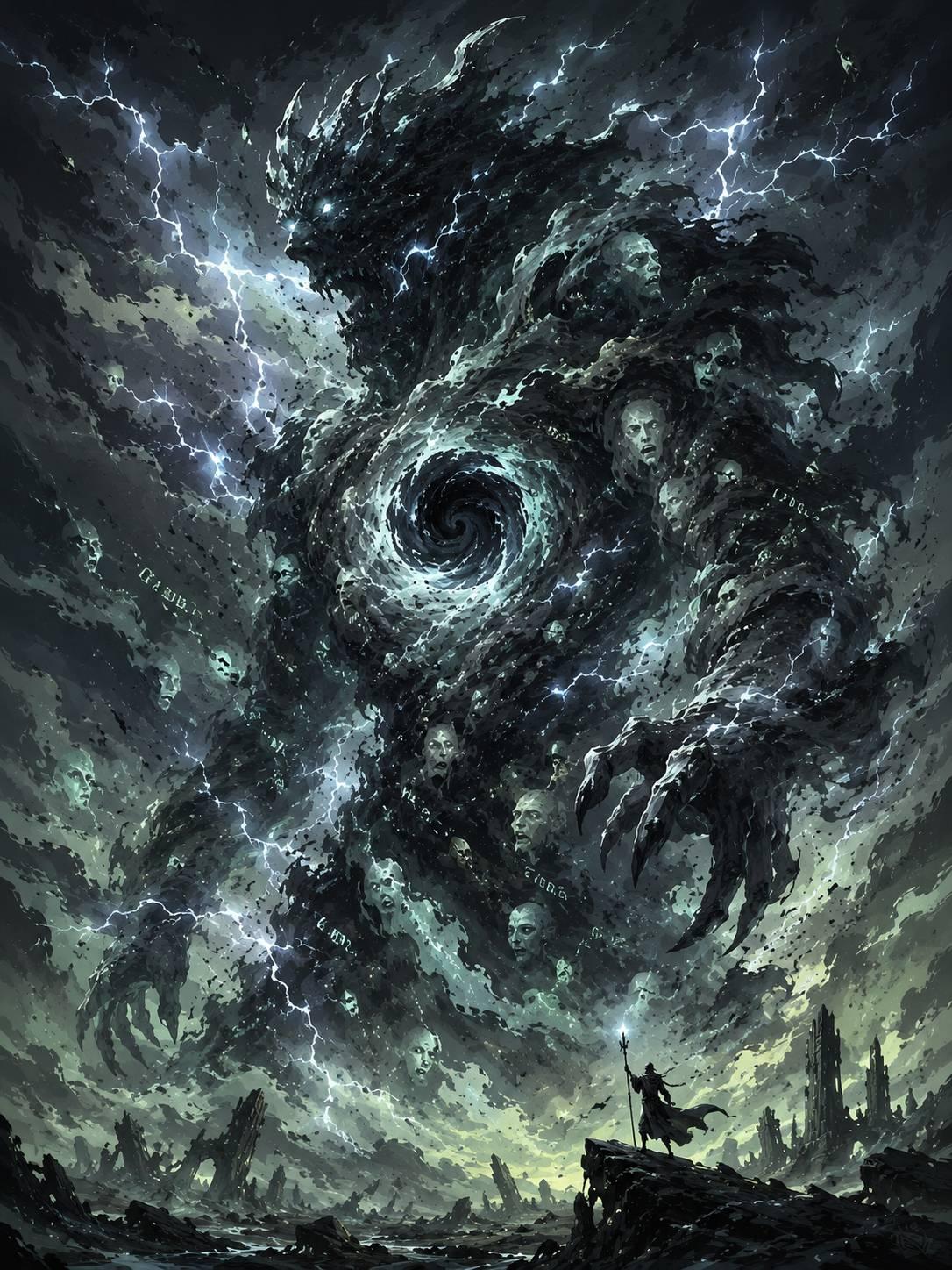
No fixed form — an enormous shifting silhouette made of storm systems, a presence that moves across the Isles with the weather fronts, trailing amnesia. Those caught in its path lose not memories exactly, but connections. They still know what they know, but they no longer remember why it mattered. They know their family’s names but not why the names move them.
Its cults give up their names voluntarily, believing identity is a cage and that the freedom of the Shadow is the freedom of those who are finally no one. They are constantly moving. By the time a devoted follower realises what has been lost, they no longer possess the framework to articulate the loss.
The Chromatic Inquisition regards Fūjin-no-Kage cults as among the most urgent interventions they undertake, precisely because the victims are, by definition, in no position to ask for help.